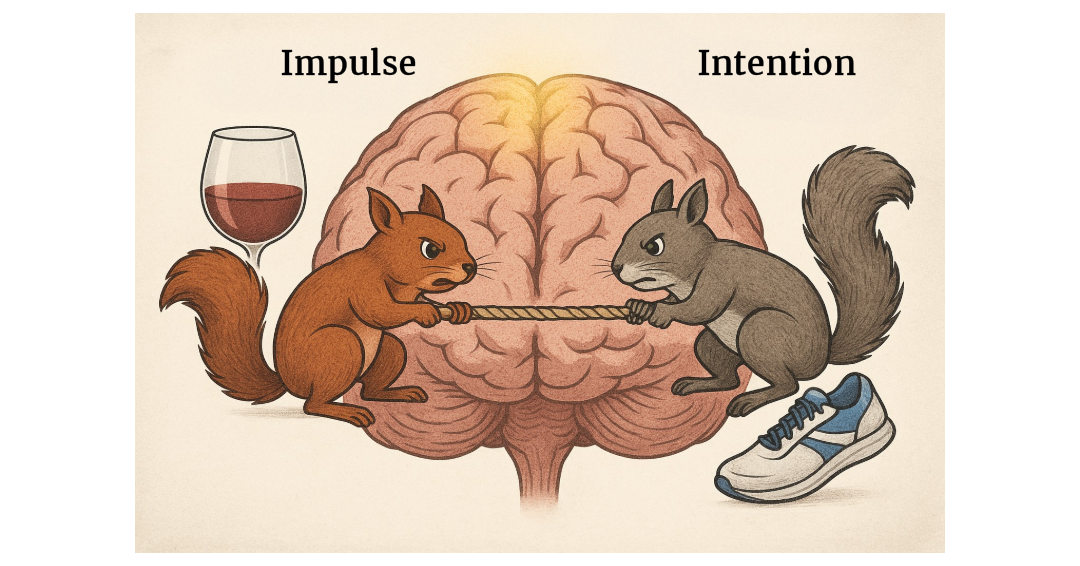
Ambivalence. That push and pull.
“I want to cut back… but I also enjoy it.”
“I’m fine, really… but something feels off.”
When I’m wrestling with ambivalence myself, it’s like two squirrels in my brain having a tug of war. One’s clinging to comfort and habits that feel familiar. The other’s pulling for clarity, energy, and change. Neither is wrong. They just want different things.
You don’t need to silence either side. You just need to start noticing the pull and deciding where to lean.
This post unpacks how to recognise ambivalence, work with it, and start changing your drinking without needing to give it all up.
1. Ambivalence means you’re paying attention
In many cultures, drinking isn’t just a drink. It’s the after-work catch-up, the wine with dinner, the toast at celebrations. So, feeling conflicted is normal.
You might think:
“I like having a drink, but not how often it’s happening.”
“I want to cut back, but I don’t want to be the odd one out.”
That internal tension isn’t a red flag. It’s a sign you’re noticing what matters.
2. It’s not a battle between good and bad
Ambivalence isn’t confusion. It’s a conversation between values.
| Side A | Side B |
|---|---|
| Clear mornings | Late-night drinking rituals |
| Feeling in control | Going along with the crowd |
| Spending with purpose | Familiar comfort |
Ask yourself:
What is each side trying to protect?
Is this about the drink, or what the drink signals?
Example:
*Client Emma, 32, London: “My ‘Friday night round’ was really about fitting in. Now I stay for one, then head home guilt-free.”*
3. Reframe the habit, keep the benefit
You don’t need a reset. You need a rethink. What are your current habits really doing for you?
| Old Pattern | New Payoff |
|---|---|
| Staying longer than you want | Leaving on your terms, no regrets |
| Overspending on social drinks | A weekend day trip instead |
| Saying yes to “just one more” | Quiet pride in keeping the reins |
Moderation isn’t about being good. It’s about staying clear.
4. Catch the autopilot thoughts
Most drinking starts with a thought, not a pour. And some of those thoughts sound true, but they’re not always helpful.
“I’ve earned this.”
“Everyone else is.”
“One won’t hurt.”
Try this:
🧠 “I notice I’m having the thought that “I’ve earned this”… but is that really what I need right now?”
That moment of distance gives you the chance to pause, rethink, and choose something that actually serves you.
Tip: If you do want to try an easy change, order a low-ABV beer or a zero-proof cocktail. Most bars offer options that look the part (especially if served in the regular option glass) – it can help you stay in control.
5. Know what you’re doing it for
If you’re just cutting back because you feel you should, it won’t stick.
But if you’re doing it to:
- Get your time and energy back
- Be sharper in the mornings
- Stop saying yes when you mean no
→ Write down your reason in a journal or make a mental note
6. Don’t overcomplicate it
Start with one small step. Try:
- Decide your limit before heading out
- Measure your pour (most “glasses” are bigger than you think)
- Take one midweek night off, or add another if you already are.
Every deliberate decision counts.
Final thought: You don’t have to feel ready
You can enjoy drinking and still want more control. You can feel unsure and still begin. Ambivalence means you’re thinking things through. That’s a good place to start.
Enjoyed the blog? Discover more about Alcohol Reset Coach and how the ARC NAV™ system helps you reset your relationship with alcohol → Homepage
Ready for a smarter way to drink less?
The Essentials Plan gives you step-by-step strategies to:
→ Navigate pub nights without overdoing it
→ Save money for things you’ll actually remember
→ Build habits that still feel like you
→ Discover more about The Essentials Plan
P.S. You’re not signing up for a new identity. Just a better way forward.
Curious about the science?
If you’re interested in the evidence behind these approaches, here are a few of the psychological frameworks and studies that informed this blog:
- Motivational interviewing shows that ambivalence is a natural part of behaviour change, not a sign of failure (Miller & Rollnick, 2012)
- Cognitive defusion from ACT therapy helps people create space between thoughts and actions (Hayes et al., 1999)
- Implementation intentions help turn intentions into follow-through by linking them to triggers (Gollwitzer, 1999)
- Dopamine reward cycles explain why alcohol habits become reinforcing and why intentional replacement strategies help (Volkow et al., 2016)
- Social identity theory sheds light on why peer dynamics affect our drinking decisions (Tajfel & Turner, 1986)
These concepts form part of the research ARC draws on across its blogs and courses. If you enjoy the blend of neuroscience and real-world advice, check out our full Essentials Plan for more.
© 2025 Alcohol Reset Coach. All Rights Reserved.