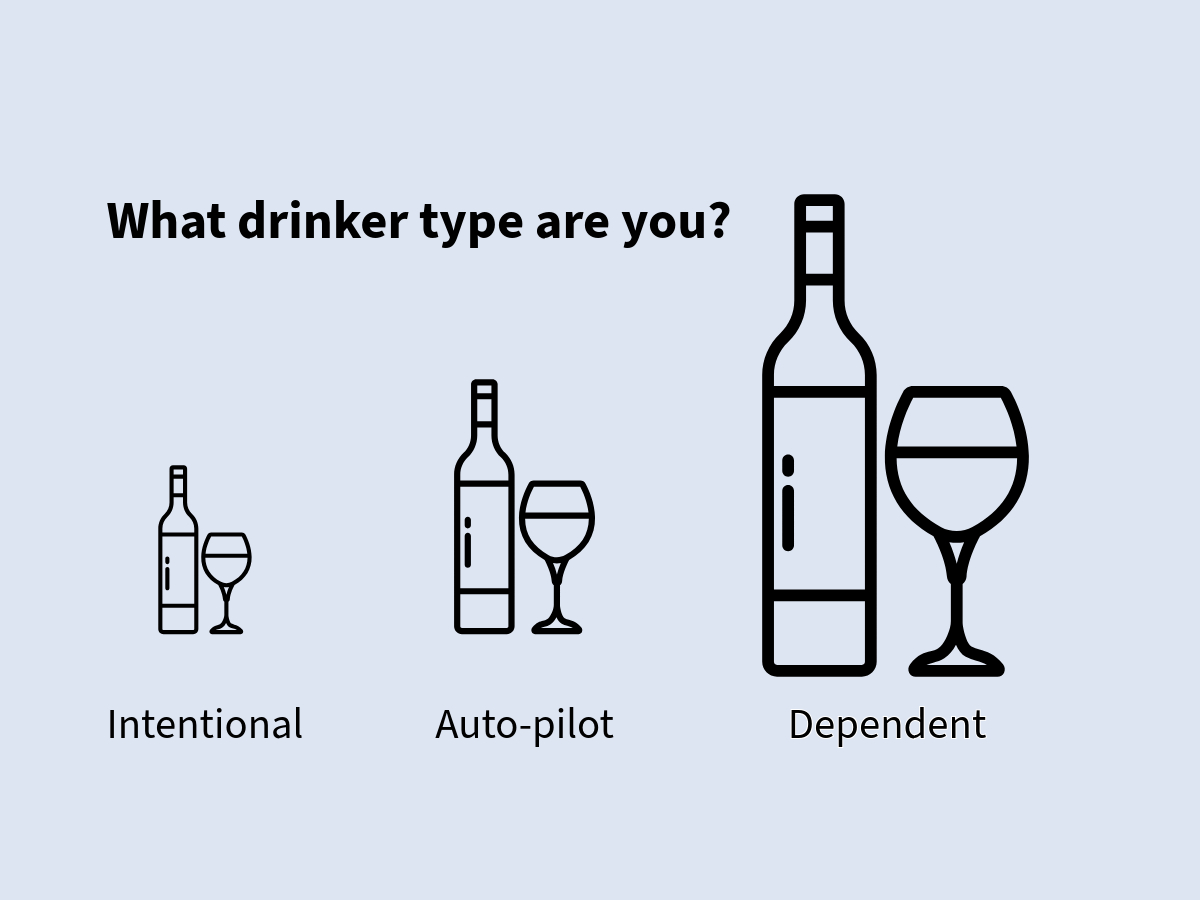
There are two different patterns at work here, and understanding which one applies to you changes everything.
The first is autopilot drinking that’s become automatic. You drink because it’s 6 pm, not because you desperately need it. The wine gets poured while you’re cooking dinner out of routine rather than craving. You could skip it if something else came up, but you rarely do.
The second is dependent drinking disguised as habitual drinking. You’re buying multiple bottles so that people won’t notice how quickly you go through them. You’re drinking some before your partner gets home, so the bottle level looks reasonable. You’re hiding empties in different bins. You’re getting anxious when you can’t drink.
Most people assume they fall into the first category. But the line between them is more blurred than you might think.
When routine overrode choice
Most people don’t set out to drink every evening. It happens gradually.
You start drinking for reasons – to celebrate, socialise, or mark the weekend. Then life gets busier and more stressful. Alcohol becomes a shortcut to feelings you used to generate in other ways.
The Friday wine becomes your primary method for signalling the weekend. The dinner wine becomes essential for making cooking feel less like a chore. The evening glass becomes your main transition between work and personal time.
Before you know it, your daily rhythm is built around when you’ll drink, not whether.
This isn’t addiction – it’s automation. Your brain made an unconscious decision to save energy. The problem is that the original reasons for drinking disappeared, but the habit persisted.
The signs you’re running on automatic
You open the bottle before deciding if you want it. The wine gets poured while you’re cooking, not because you thought “a glass would be nice”, but because that’s what happens at 6 pm. The decision was made somewhere in the past, and you’re just following the script.
Your rules keep bending to fit what you’re already doing. “No drinking on school nights” became “no drinking on work nights” became “just one with dinner.” Each change felt reasonable in isolation, but your boundaries have quietly moved to accommodate your behaviour.
You spend more energy negotiating with yourself than enjoying the drink. The internal monologue – should I, shouldn’t I, just one, may as well finish it – takes more energy than the actual drinking. You’re exhausted by the decision before you’ve made it.
Alcohol is doing too many jobs in your life. It’s become your primary method for marking the end of work, processing stress, socialising, rewarding yourself, and making Netflix watchable. When one substance is carrying that much weight, you’ve outsourced too much to the bottle.
Your social life is being organised around drinking. You avoid lunch dates because you know you’ll end up having three glasses of wine at 1 pm, and people will notice. You skip work drinks because you won’t be able to stop at one, and it’ll be obvious. Your friend group has gradually narrowed to people who drink at your level, because they’re the only ones who don’t make you feel weird about it.
You’re never available to drive. There’s always a reason you can’t pick people up from the station, can’t drive to events, can’t take the kids to early morning activities. Your partner has become the permanent designated driver because you’re either drinking, hungover, or still over the limit from the night before.
Morning opportunities get declined. No early meetings, no 9 a.m. gym sessions, and no weekend activities that start before noon. Not just because of hangovers, but because you might still be over the drink-drive limit and you know it.
Your “special occasions” became Tuesday occasions. The bottle you bought for when friends came over got opened on a random weeknight. The wine you saved for weekends became Thursday wine. The occasions multiplied until every evening qualified as an occasion.
The difference between can’t and don’t
Here’s the key distinction: autopilot drinkers can skip drinking, they just don’t. When the drink is drinking you, you’ve lost the ability to choose.
Signs the drink is drinking you:
- You organise your social life to hide how much you drink
- You never volunteer to drive because that would mean not drinking
- You turn down morning commitments because you’re hungover or still over the limit
- You only hang out with people who drink as much as you do
- You check if alcohol is available before accepting invitations
- You buy multiple bottles so people don’t notice how fast you go through them
- You drink some before your partner gets home, so the level looks reasonable
- You hide empties in different bins around the house
If reading “just don’t drink tonight” makes you think “yeah, I could do that but I probably won’t,” you’re likely on autopilot.
If reading “just don’t drink tonight” makes you think “absolutely not, I need something after the day I’ve had,” or if it causes anxiety about how you’ll cope, the drink is drinking you.
The solutions are completely different:
- Habits respond to pattern interruption, environmental changes, and conscious choice
- Dependencies require medical supervision and often professional treatment
When cutting back needs medical supervision
If you’re drinking daily and want to reduce rather than stop altogether, you need medical guidance. This isn’t being overcautious – it’s being realistic about how alcohol affects your nervous system.
Physical dependence develops gradually. Your body adapts to regular alcohol by adjusting neurotransmitter levels. When alcohol is suddenly reduced, those systems can overcorrect dangerously.
Warning signs that you need medical supervision:
- Drinking first thing in the morning
- Shaking that stops when you drink
- Anxiety or panic when you can’t drink
- Sweating, nausea, or headaches when you don’t drink
- Unable to sleep without alcohol
- Drinking to prevent withdrawal symptoms
It’s worth noting that some impulsive drinking behaviours aren’t purely down to physical dependency. They could be coping mechanisms for mental health issues or undiagnosed ADHD. Sometimes, ADHD is actually unmasked when people sort out their alcohol problems – the drinking was covering up symptoms that become apparent once it’s removed. If you recognise this pattern, it’s worth exploring both the alcohol dependency and the underlying conditions simultaneously – your GP can help with both.
If any of these apply, see your GP before making any changes. They can prescribe medications to make reduction safer and may recommend tapering schedules or supervised detox.
Making that appointment easier: We’ve created a free Pre-Visit Alcohol Assessment, a fillable PDF that helps you document your drinking patterns honestly before seeing your doctor. Sometimes the most challenging part isn’t admitting there’s a problem, but rather knowing how to explain it clearly within a 10-minute appointment. Download it, fill it out at home, and take it with you or email it to your practice beforehand. This is private between you and your doctor.
For autopilot drinkers: making conscious choices again
If you’re drinking automatically rather than compulsively, change is possible through awareness and environmental design.
We call this group “Inbetweener Drinkers” – not a problem group, just people who’ve drifted into autopilot drinking and want to make it intentional again. Sober coaches like to call it “grey area drinking” as if you’re teetering on a cliff edge. We’re more realistic: most people in this space need the right knowledge and proven methods to get back to conscious choice.
Interrupt the automation. Change something about your evening routine so the wine-pouring doesn’t happen unconsciously. Cook in a different place, eat dinner first, go for a walk when you get home. The goal is to reintroduce conscious choice into an unconscious habit.
Make drinking slightly harder. Don’t keep wine chilled and ready. Please put it in a different room. Use a smaller glass. Small friction can be enough to break automatic behaviour and restore deliberate decision-making.
Develop alternative transitions. If alcohol marks the end of your work day, you need other ways to signal that transition. A walk, a shower, changing clothes, calling a friend. Without alternative rituals, you’ll default back to the bottle.
Question the occasion. Before opening anything, pause and ask: “What am I hoping this will do for me right now?” Often you’ll realise you don’t actually want a drink – you want to relax, or celebrate, or mark time. Once you’re clear on the actual need, you can find other ways to meet it.
When you want to step up a gear
Those basic habit interruptions can help break automatic patterns, but if you want a comprehensive approach to making lasting change, that’s where ARC NAV™ comes in.
It’s the system that powers the “Sophisticated Moderation” course, designed to help reset your relationship with alcohol by learning to drink with intent rather than habit, and better as well as less: no white-knuckling green juices and empowerment chants. It was created after 30 years of experience working in the wine trade after all.
ARC NAV™ works through Notice patterns and triggers. Adjust something small. Verify what works. Rather than starting over every time, you recalibrate as you go.
It includes the neuroscience behind alcohol in plain English, proven tools that fit into real life, trackers and reflection journals for better self-feedback, and achievable goals with no shaming tactics. It’s your internal GPS to navigate the breakdowns and roadblocks that usually throw people off track.
[Learn more about Sophisticated Moderation]
The scope of this work
I provide information for individuals who want to reduce their alcohol consumption and can do so safely. I’m not a doctor, and I don’t work with dependent drinkers – they need medical support I can’t provide.
If you’re hiding your drinking, unable to stick to limits, or experiencing anxiety when you can’t drink, please see your GP before trying to change anything.
But if you’re drinking on autopilot rather than compulsion, if you can take it or leave it but usually choose to take it, then conscious choice and environmental change can help you drink more deliberately.
Understanding your drinking pattern: If you’re curious about which type of autopilot drinker you are, try our “What Kind of Drinker Are You?” assessment. It’s not a diagnostic tool; it’s a pattern analysis that helps identify your triggers and decision points. As you become more involved with ARC, we will provide increasingly sophisticated assessments to help fine-tune your approach. If it’s not available when you try, please try again later, as we’re upgrading our contract to increase capacity.
[Take the drinking pattern assessment]
The question isn’t whether you can change – it’s whether you want to. And you can’t answer that honestly until you’re clear about what’s really driving your drinking in the first place.
Want to find out more about Alcohol Reset Coach? [Visit our Homepage]